AGP Executive Report
Last update: 2 days agoIn the past 12 hours, the most prominent Cook Islands–relevant developments are cultural, climate/energy, and community resilience. A major shift for Cook Islands dance in Aotearoa was reported: two Auckland dancers, Satiri Tele Joe and Titaina Kiria, will travel fully funded to the 2026 Te Mire Ura Nui International Dancer of the Year competition—covering return airfares, costumes, accommodation, and a travel allowance for the first time, after years of dancers self-funding flights and costs. The same period also carried regional climate-finance momentum: the Pacific Resilience Facility (PRF) Treaty is reported as coming into force after Fiji and Australia ratified it, with the treaty framed as a Pacific-led mechanism to support community-level climate resilience, clean energy transition, and adaptation.
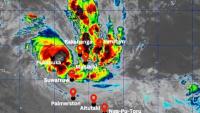
Energy and resilience policy coverage continued alongside the PRF ratification. Australia’s commitment to the PRF was described as AUD$100 million (FJ$157 million), positioned as a move toward faster, more accessible grant-based climate financing for frontline communities. Related reporting also highlighted broader Pacific efforts to reduce diesel dependence—though the example provided was Nauru, which signed an MoU to explore a solar and battery pathway intended to move it toward near-total renewables. In parallel, Cook Islands–specific practical updates included weather warnings for the Southern Group (strong winds and heavy rain) and community/civic items such as the Cook Islands Christian Church marking May 5 as “CICC Day” with a foundation-laying ceremony for a national monument.
Beyond policy, the last 12 hours included local youth and sport/community items, but with less evidence of a single major Cook Islands event. A Blue Light Life Skills Camp report noted South Island students’ awards (Overall Excellence and Overall Merit) following a five-day programme with the New Zealand Defence Force. Other items in the same window were entertainment/sport and a brief “Bula” mention, but the provided text is not detailed enough to confirm a major Cook Islands-specific turning point from those alone.
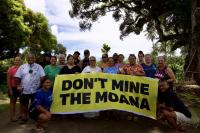
Looking across the wider 7-day range, there is clear continuity in regional priorities around resilience and development. Multiple articles reinforce the PRF as a Pacific-led financing facility (including descriptions of grant-based funding for adaptation, disaster preparedness, and loss-and-damage responses). There is also sustained attention to the environmental risks of extractive industries: letters and reporting in the period argue against seabed mining, warning of biodiversity impacts and long-lasting ecosystem damage. Meanwhile, Cook Islands institutional capacity-building appears in football development coverage (CIFA appointing Tuka Tisam as technical lead for FIFA’s Talent Development Scheme) and in governance/risk updates (CIIC appointing its first chief risk officer), suggesting ongoing work to strengthen local systems alongside the regional climate agenda.
Note: AI-generated summary based on news headlines, with neutral sources weighted more heavily to reduce bias.